Why a house can move away while you save
The moving-target explanation behind the tracker.
Future Home Affordability Hub
Yes. A target home can compound faster than the resources pointed at it, even while those resources grow. Use the source-backed evidence and tools here to make that moving target visible at these assumptions.
The moving target
Historical home-cost rates are source-backed modeling inputs, not predictions. Compare the evidence, choose the tool that matches your question, or track one modeled home against the resources pointed at it at these assumptions.
Choose your path
Compare the modeled future cost with resources pointed at it, then save and return.
Model a down-payment targetEstimate a future home price, required down payment, and monthly savings target at these assumptions.
See the costs after closingModel taxes, insurance, utilities, upkeep, and user-entered replacement waves without changing the Tracker.
Inspect national work-yearsSee the source-stamped starter-home-hours dataset and its historical chart.
Explore metro examplesOpen source-backed future-cost pages for five metros. Examples only, not rankings.
Modeled result
Calculate to see funding at your deadline, at these assumptions.
Calculate once to see the modeled gap at these assumptions.
Assumptions panel
Saved home scenario
The comparison keeps the original saved scenario beside the edited scenario at these assumptions.
| Metric | Before | After |
|---|
National evidence
The starter-home-hours series divides a national bottom-tier home value by average private-sector hourly earnings. The generated chart stays tied to the source-stamped dataset, so this hub does not freeze a headline number that can go stale.
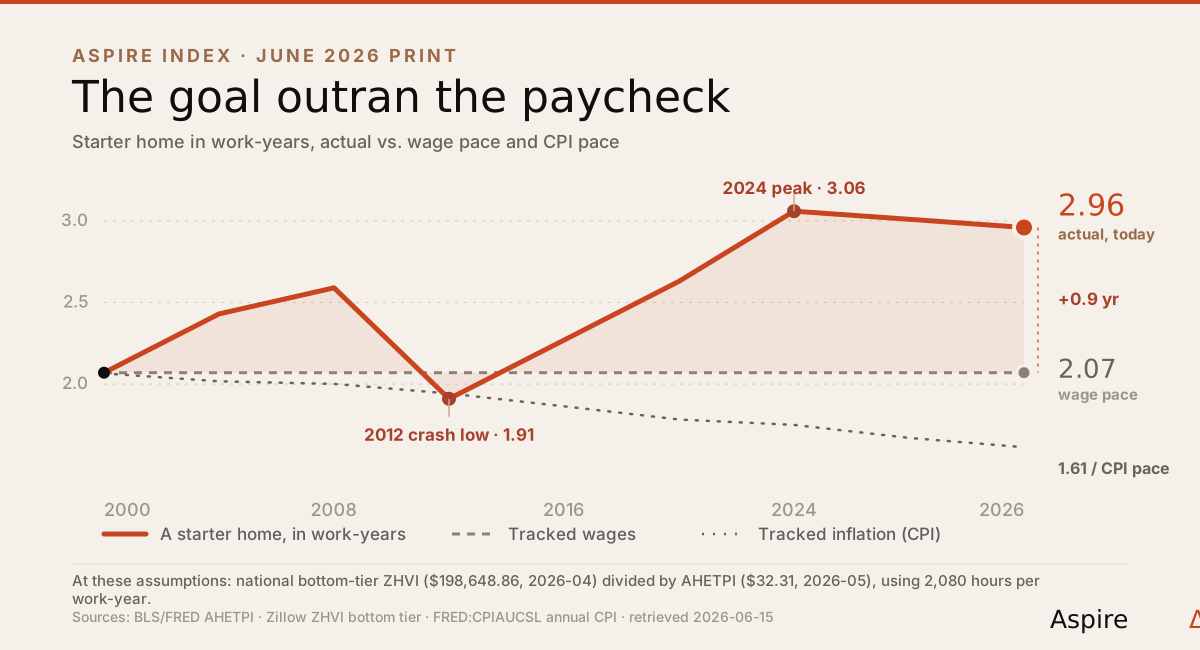
It is a national historical comparison, not a mortgage model or a household-specific affordability result. The dataset page carries the source manifest, retrieval dates, methodology, and limitations.
Metro examples
These pages use historical Zillow ZHVI home-price data as editable modeling inputs at these assumptions. They do not recommend a city, relocation, or a time to buy.
Education and resources
The moving-target explanation behind the tracker.
Educational carrying-cost context. The tracker does not model these costs.
A source-backed answer page for a fixed price point, not a purchase recommendation.
Open the source-stamped datasets behind Aspire rates, metro gaps, and starter-home-hours context.
See the data sources, formulas, assumptions, and limitations behind Aspire models.
FAQ
No. The hub and tracker model future-home affordability at visible assumptions. They do not estimate mortgage approval, loan terms, taxes, insurance, PMI, HOA fees, or closing costs.
The Future Home Tracker compares one modeled future home with resources pointed at it and supports save and return. The Home Affordability Calculator models future price, purchase cash, a user-entered 30-year fixed-rate scenario, and monthly owner costs at these assumptions.
Metro pages apply each committed historical Zillow ZHVI source row's trailing CAGR to a current source value over a selected horizon at these assumptions. Historical CAGRs are modeling inputs, not predictions.
Starter-home hours divides a national bottom-tier starter-home value by average private-sector hourly earnings to show the work time represented by that home price. It is a national historical dataset, not a household-specific result.
No. Aspire does not rank metros or tell you where, when, or whether to buy, wait, relocate, borrow, refinance, or invest. It provides an educational planning lens at visible assumptions.
What this does not do
This tracker does not estimate taxes, insurance, closing costs, income qualification, mortgage approval, live home data, or investment recommendations. It keeps one modeled home goal visible and editable.