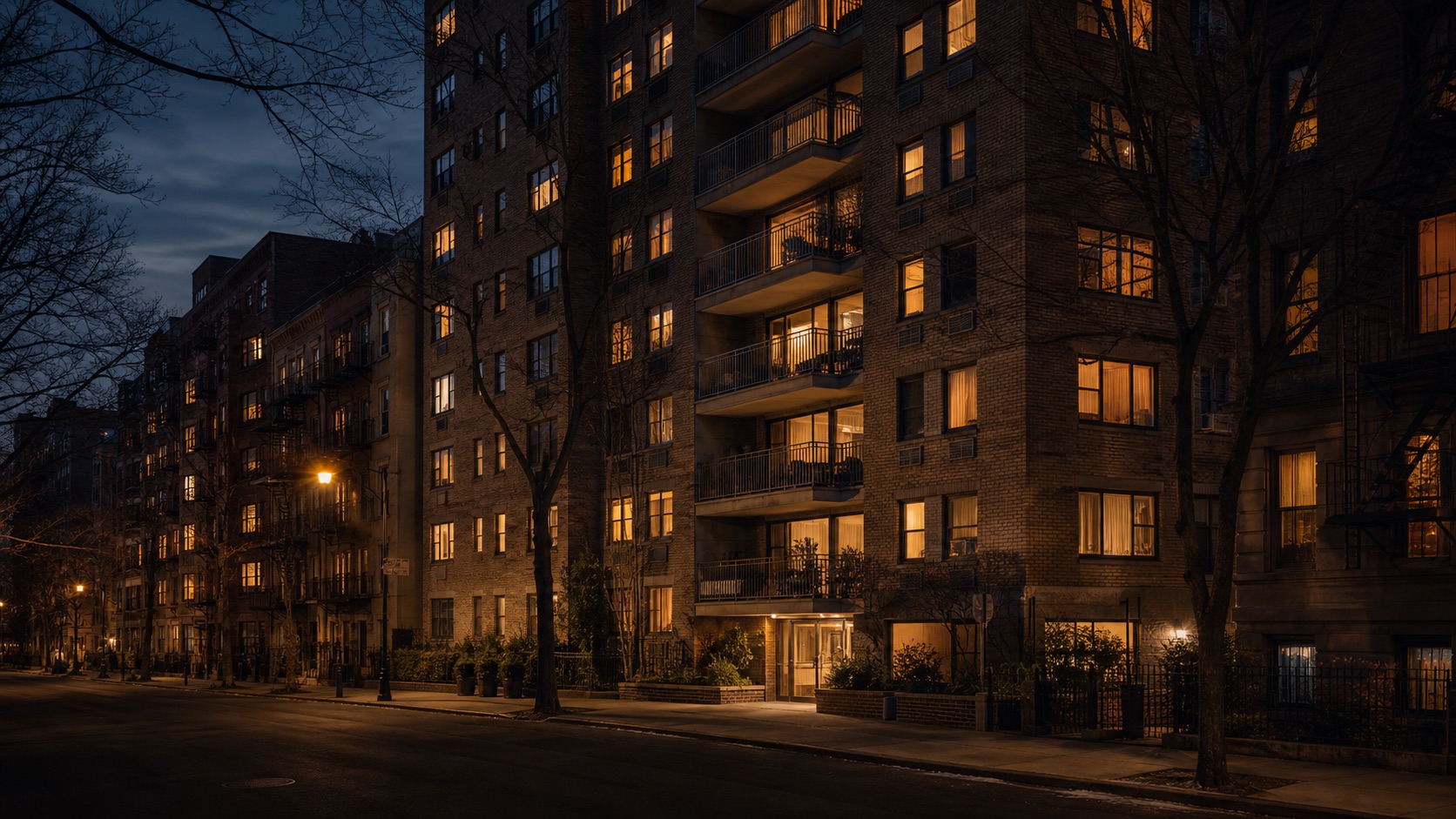
Where is Barney Miller's apartment, and what would it cost today?
Barney Miller is set around Greenwich Village in Lower Manhattan. At these assumptions, this page models a Village one-bedroom apartment at about $6,600 a month today, versus a $400 a month 1975 rent scenario.
Then-vs-now: rent moves from a plausible civil-servant apartment line item to a cost that can swallow the practical room in a public-sector paycheck.
Salary-to-afford metro pages are not live yet, so this bridge routes to the closest shipped home-affordability and future-cost surfaces.
| Property | High-Rise Apartment |
|---|---|
| Then | ~$400/mo rent · show-era editorial scenario input |
| Now | ~$6,600/mo Greenwich Village 1BR rent proxy · retrieved June 10, 2026 |
| Priced in hours | ~87 hours/month then · ~161 hours/month now, at these assumptions |
Equivalent rent is about $6,600/mo, enough to turn a steady civic job into a much tighter housing story.
Barney Miller gives its characters a working New York, not a luxury brochure. The captain is a public servant with authority, stress, and a steady salary. Greenwich Village is part of the civic fabric around him, not a trophy neighborhood. That distinction matters because the apartment is not supposed to prove wealth. It is supposed to feel like a plausible home base for a competent city employee.
In 1975, the rent figure used here is roughly $400 a month against a steady captain-level paycheck. That relationship is tight but intelligible. Rent takes real money, but it does not consume the entire monthly paycheck. The character can have a job, a neighborhood, and a life without the apartment becoming the main plot device.
Today the equivalent rent proxy is around $6,600 a month. A salary can look large in isolation while rent makes it smaller. After taxes and ordinary costs, that apartment can eat the practical room a household needs to function. The title improved. The purchasing power did not keep the same shape.
The civic implication is sharp. A city can praise public servants and still price them away from the neighborhoods they serve. The old rent-to-salary relationship gave the character a believable stake in the place. The new one turns that stake into a much more fragile claim.
This is why broad income comparisons can mislead. A public-sector salary can rise substantially and still lose ground against a specific urban housing market. The question is not whether nominal pay went up. The question is whether pay kept pace with the life the old pay could buy.
Aspire's gap is built around that question. It compares the cost growth of the priced future against the growth of listed resources, at these assumptions. Barney Miller's rent is a clean example: the city did not merely inflate. It repriced belonging in a neighborhood that used to have room for its own public servants. That makes the rent line a civic affordability measure, not just a private housing complaint. In plain English, the map changed.
Sources and assumptions
- Setting: Barney Miller is set around a fictional NYPD precinct in Greenwich Village; source reference retrieved June 10, 2026 from Barney Miller background.
- Current rent proxy: RentHop Greenwich Village rent data, one-bedroom average rent of about $6,600, retrieved June 10, 2026.
- Then rent proxy: editorial scenario input already used on this page, about $400 per month for the 1975 Barney Miller setting.
- Wage benchmarks: FRED/BLS average hourly earnings, $4.61 national private hourly wage in January 1975 and $41.11 NYC metro private hourly wage in April 2026, retrieved June 10, 2026.
The hours row uses available BLS wage series as an affordability denominator. It is not a claim about Barney's exact lease, taxes, overtime, or household budget.
Quick questions
Where is Barney Miller set?
The show is set around a fictional NYPD precinct in Greenwich Village. This page uses Greenwich Village rent as the housing proxy.
How much would that apartment rent for today?
At these assumptions, the current one-bedroom rent proxy is about $6,600 a month using June 2026 Greenwich Village market data.
Is this a real listing estimate?
No. It is a neighborhood-level rent proxy for the fictional housing setup, not a claim about a specific available unit.
Compare another pop-culture home
Full House · Good Will Hunting · Home Alone · Married with Children · Seinfeld · The Simpsons